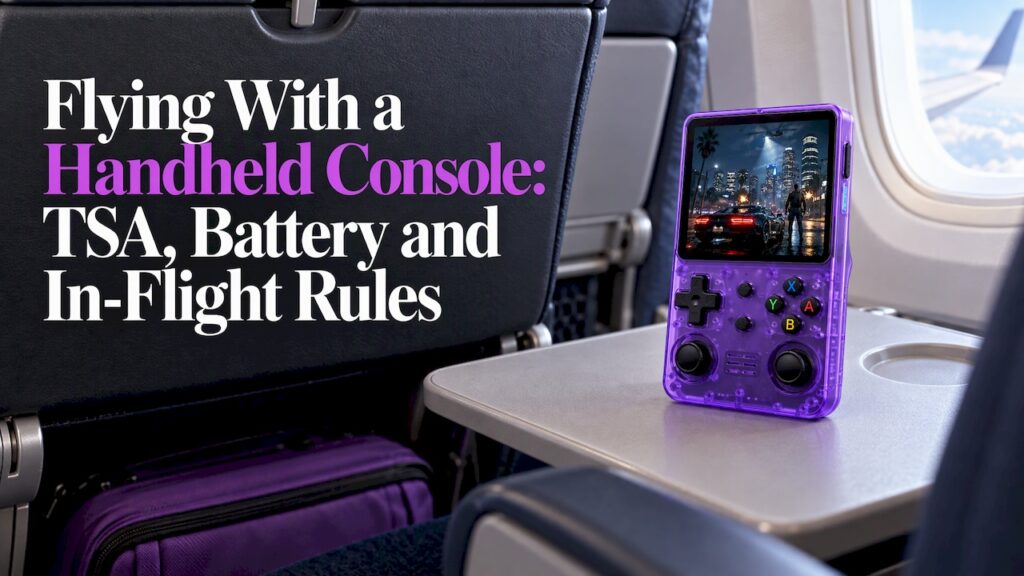
Yes, you can fly with a handheld console in the United States. Pack it in your carry-on, not your checked bag. Take it out of the bag at the TSA checkpoint if the officer asks, keep any spare battery with you, and switch on airplane mode once you are in the air. The rest of this guide covers each step, what goes wrong, and how to make a long flight easy for yourself or for a kid in the next seat.
TL;DR
- Handheld consoles with lithium batteries belong in your carry-on, according to the FAA, so the flight crew can respond if a battery overheats.
- Spare or uninstalled lithium batteries must also ride in the cabin, never in checked luggage, and personal devices must stay under 100 watt-hours.
- Expect to power the device on at security if an officer asks. A dead console is not allowed on the aircraft.
- Use airplane mode in flight, and keep the device fully shut off in your bag rather than asleep.
- An offline console that needs no Wi-Fi, such as our Retro Pulse, suits the way airplane mode works.
Table of Contents
- Why the carry-on is the right place
- Getting through TSA with a handheld
- Lithium batteries: the rules that matter
- Using the console in flight
- How much battery do you need?
- A packing checklist
- Who this routine helps most
- Perspective
- Get a handheld that is ready for the trip
- FAQ
- Sources
Why the carry-on is the right place
The FAA’s PackSafe guidance says portable electronic devices containing lithium metal or lithium ion batteries, a category that includes handheld game consoles, should go in carry-on baggage. The reason is practical. Battery fires are rare, but if one starts in the cabin, a crew member can see it and act. In the cargo hold, nobody can.
There is a second reason that has nothing to do with batteries. Checked bags get thrown around. Engadget’s 2026 guide for gamers notes that even large home consoles are technically allowed in checked bags, but rough handling makes the cabin the safer choice. A handheld has a screen and sticks that take the brunt of any drop. Keeping it in the bag at your feet or in the seat pocket protects it.
If you ever have to check a bag with a console in it, the same Engadget piece suggests a padded protective case and an AirTag in the bag. Treat that as a fallback, not a plan.
Getting through TSA with a handheld
The TSA’s What Can I Bring? page lists video game consoles as allowed, and the final call on any item at the checkpoint belongs to the officer on duty. A few habits keep the line moving.
Before you leave home
- Charge it. The TSA says officers may ask you to power on an electronic device to show it works, and devices without power are not permitted on the aircraft. A full battery solves that problem and also gives you something to play at the gate.
- Shut it down completely. Do not rely on sleep mode. Engadget points out that a console that wakes up inside a bag can heat up. A full power-off takes seconds.
- Group your gear. Put the console, charging cable and any spare battery in one pouch near the top of your bag, so you can pull it out without digging.
At the checkpoint
TSA asks passengers to take handheld game consoles out of the carry-on for X-ray screening. Rules and lane types vary by airport and can change, so follow the officer’s instructions on the day. Put the console in its own bin with your phone and tablet. It is small, so it is easy to leave behind, and the bin is the most common place people forget things. Check the bin and your pockets before you walk away.
Traveling with kids
If you are carrying the console for a child, be the one who owns the pouch through security. Kids hand over devices at the belt and then wander off. Let them hold it again only once you are through and seated at the gate. If you are planning the whole trip’s entertainment, our guide to offline travel games for kids covers a quick check to run before you leave home.
Lithium batteries: the rules that matter
This is the one part of the trip with firm numbers, so it gets its own section.
The 100 watt-hour limit
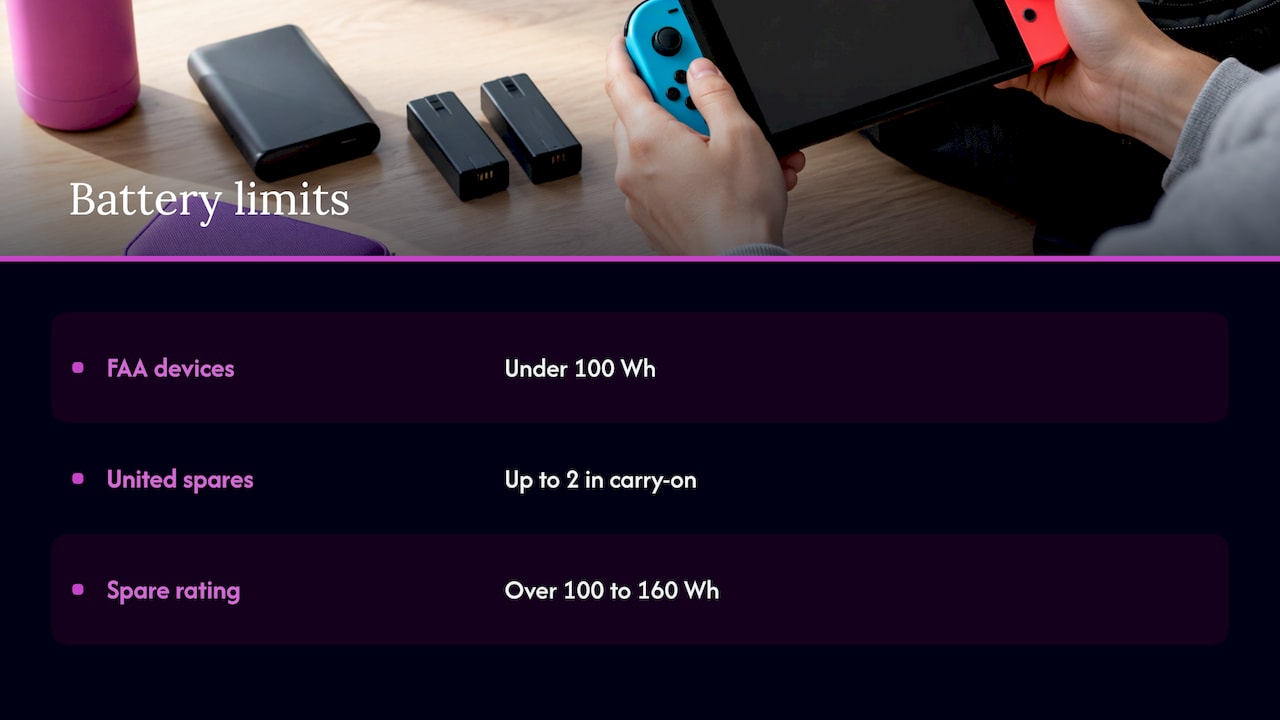
A watt-hour (Wh) measures how much energy a battery stores. The FAA says lithium-battery personal devices must be under 100 Wh. United Airlines states the same limit for lithium-ion batteries and adds that you can carry up to two larger batteries, above 100 and up to 160 Wh, in your carry-on. A handheld console battery is a small fraction of that limit. The rating is printed on the battery or the device label if you want to see it. Airlines may apply their own policies on top of the FAA’s, so check your carrier’s page before you fly.
Spare batteries
The FAA is clear that spare and uninstalled lithium batteries go in carry-on baggage, not checked baggage. United’s dangerous items page specifically prohibits power banks and loose lithium batteries in checked bags.
That matters if your handheld has a removable battery. The Retro Pulse has one, rated for 6 to 8 hours of play, so you can carry a second battery for a long trip. Here is how to do it properly:
- Keep the spare in your carry-on, never your checked bag.
- Protect the terminals against short circuits. United suggests using the manufacturer’s packaging or covering the contacts with tape.
- Do not toss it loose into a bag with keys or coins.
Damaged batteries stay home
The FAA also says damaged or recalled batteries, and battery-powered devices likely to create sparks or dangerous heat, must not be carried aboard unless the battery is removed or made safe. If a battery is swollen, hot to the touch while idle, or has a cracked case, retire it before the trip. Our guide to retro handheld overheating explains the warning signs and safe habits. For a deeper look at what you can pack, see our page on TSA rules for lithium batteries.
Older handhelds with AA batteries
Some vintage handhelds run on disposable alkaline batteries. Engadget notes these are not subject to the lithium-specific storage rules that modern consoles face. Carrying them in the cabin is still the sensible habit.
Using the console in flight
You can use a handheld console during the flight, with two conditions. United’s electronic device policy allows handheld gaming consoles as approved devices in airplane mode, except during takeoff and landing. Cabin crew will announce when devices must be stowed or switched to airplane mode. Do what they say, and expect that other airlines may word their rules a little differently.
What this means for game choice
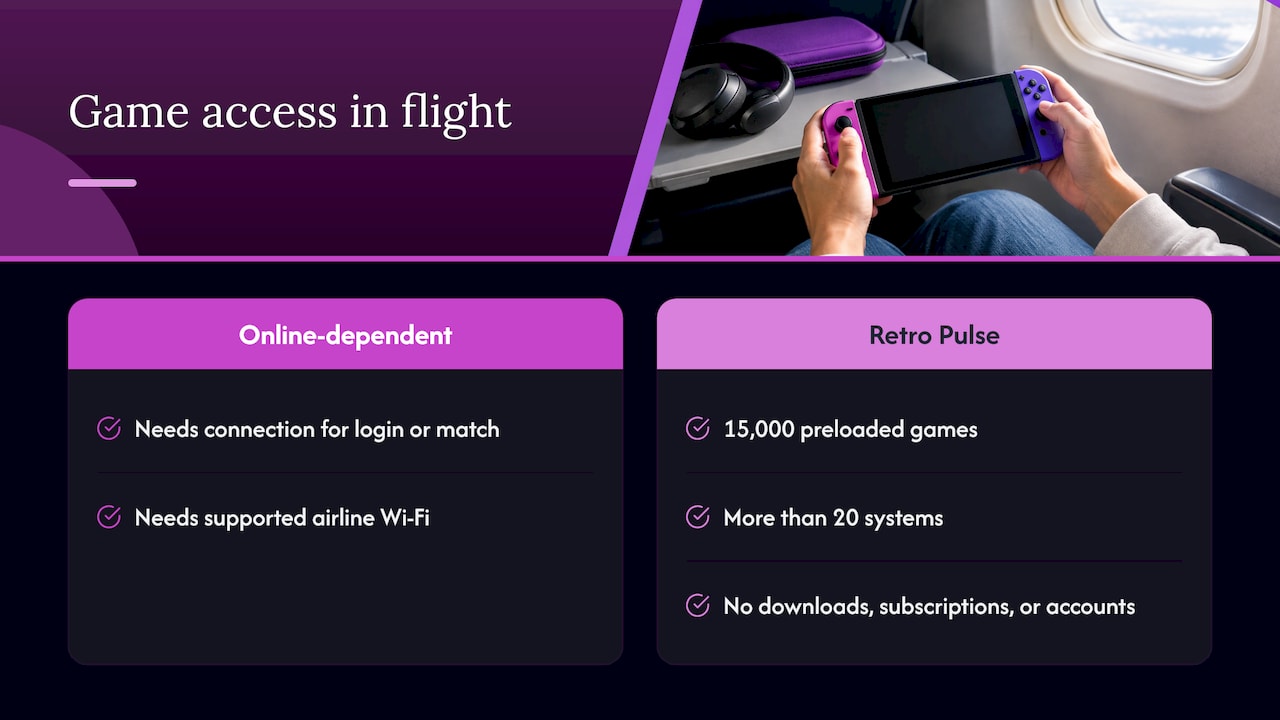
Airplane mode switches off Wi-Fi and cellular radios. Anything that needs a connection, whether a login, a download, a store or an online match, will not work at 35,000 feet unless the airline sells Wi-Fi and the device supports it. Planning around that is the biggest difference between a good flight and a frustrating one.
This is where an offline-first handheld earns its place. The Retro Pulse comes preloaded with 15,000 classic games from more than 20 systems, including NES, SNES, Genesis, PS1, N64, Game Boy, GBA and Arcade. There are no downloads, subscriptions or accounts, so there is nothing to sign in to once the cabin door closes. You turn it on and pick a game.
Controls that work on a tray table
A tray table is small and the seat in front of you may recline. Handhelds with a real D-pad, twin sticks and L/R triggers, as on the Retro Pulse, let you play in your lap or with the device held close, without reaching across a touchscreen. The 3.5-inch IPS display is compact enough that you can play it in a middle seat without crowding your neighbor.
Noise
Play with headphones, or turn the volume down. A speaker blasting retro soundtracks is not what the next row wants after a red-eye. Our guide to quiet handheld gaming has tips for playing without the noise.
How much battery do you need?
A realistic estimate beats a guess. The Retro Pulse’s removable battery is rated for 6 to 8 hours of play. A typical domestic flight is shorter than that. Add the time at the gate, the taxi and the layover, and a single day of travel can run past 8 hours.
| Trip | Rough time with the device out | Battery plan |
|---|---|---|
| Short domestic hop | 1 to 3 hours | One full charge |
| Cross-country nonstop | 5 to 6 hours | One full charge, plus a spare in your carry-on if you want margin |
| Connection with layover | 8 hours or more | A spare battery, plus USB-C charging at the gate |
The Retro Pulse charges over USB-C, so the cable you already use for your phone or tablet works with it. Many airports have charging stations near gates, but outlets are often taken, so a charged spare is the better plan. Keep the console cool and out of direct sun on the way, and do not leave it in a hot car before you head to the terminal.
A packing checklist
- Console charged and fully powered off.
- Spare battery with covered terminals, in the carry-on.
- USB-C cable and a charging brick.
- Headphones.
- microSD cards if you use them. The Retro Pulse has dual microSD slots for adding games, and cards are small enough to keep in the same pouch.
- A hard or padded case so the screen and sticks survive a squeeze under the seat.
- For kids: pick a short list of favorites before you leave, so the first ten minutes of the flight are not spent browsing.
Who this routine helps most
Commuters and frequent flyers. Once the pouch routine is a habit, you stop thinking about it. The console goes in the same spot every trip.
Parents. A child who has a game ready before boarding is easier to travel with. Classics like platformers and puzzle games work in short bursts and do not need a story to follow.
Students. Flying home for the holidays often means long travel days and tight budgets. An offline handheld with no subscription means no extra costs on the trip.
Gift buyers. If you are giving a console for a trip, tell the recipient about the battery rules. A charged console and a note about the spare battery is a gift that works from the first flight.
Perspective
We built the Retro Pulse around one idea: you should be able to play retro games right away, anywhere, with no setup. Air travel tests that idea better than almost any other situation. There is no signal, little space and a lot of waiting.
That is why we pair a preloaded library of 15,000 games with an offline-first design. Nothing needs to download and nothing needs a login. The battery is removable, so a long travel day is a matter of swapping one in, and that is easier to carry through security than a heavy power bank.
We also ship from a U.S. warehouse, which means a console ordered for a trip arrives on a U.S. timeline. It is covered by a one-year warranty and 30-day returns. If you are buying a handheld for a holiday flight, order early enough to charge it and test your favorite games at home before you pack.
Sean
Get a handheld that is ready for the trip
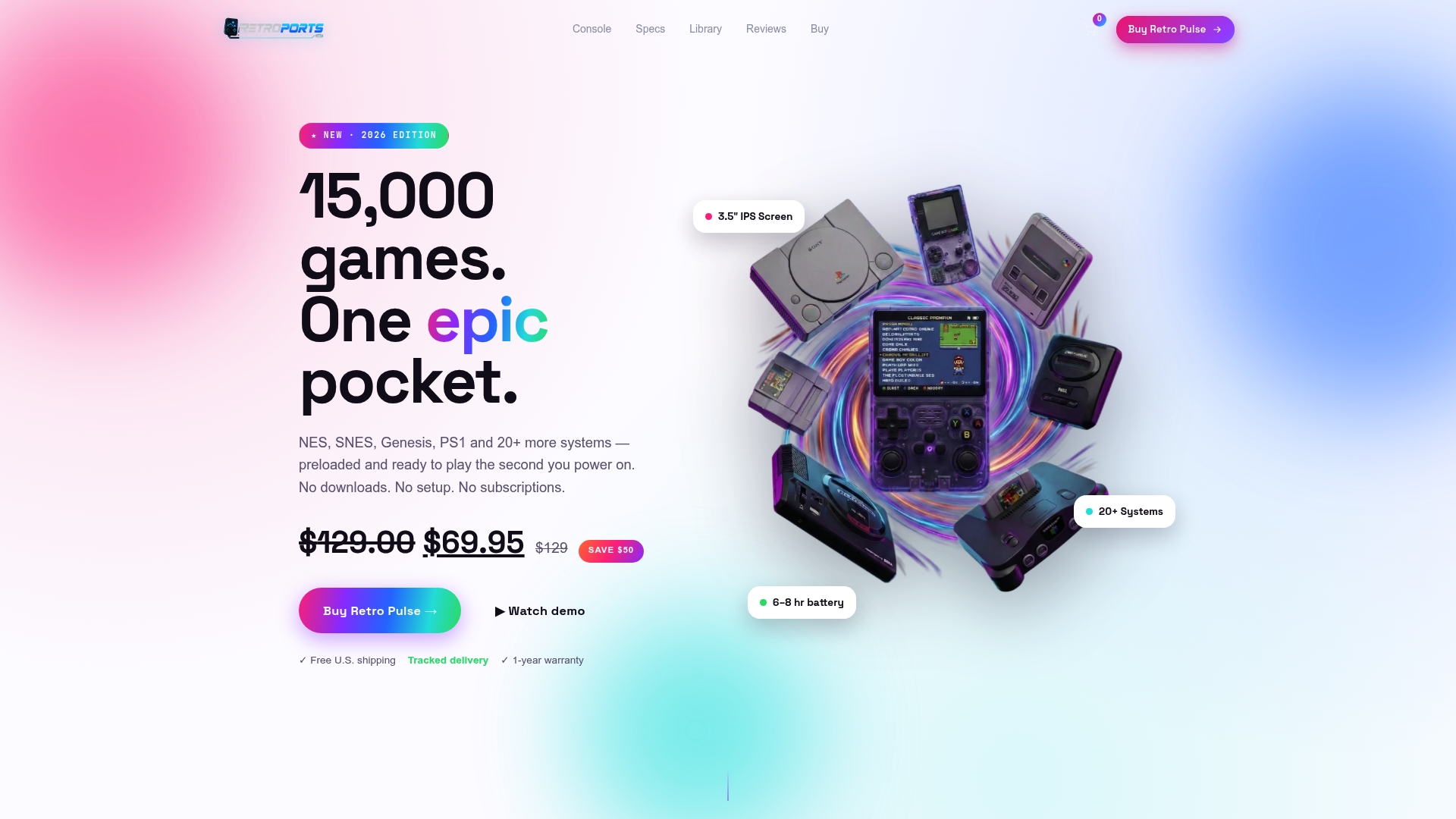
If you want one device that handles a whole travel day, the Retro Pulse is the one we built for it. It comes with 15,000 games preloaded, a removable battery rated for 6 to 8 hours, USB-C charging and a 3.5-inch IPS display. You can start playing as soon as it is charged, with no accounts or downloads.
If you are still comparing options, the retro handheld buying guide walks through what to look for.
FAQ
Can I bring a handheld console in my carry-on on a US flight?
Yes. The FAA recommends carrying devices with lithium batteries in the cabin, and the TSA allows game consoles through security. Officers may ask you to take the device out for X-ray screening, and the final decision at the checkpoint is theirs.
Can I put my handheld console in checked luggage?
The FAA advises against it for lithium-battery devices, and spare lithium batteries must never go in checked bags. Even when allowed, checked bags are handled roughly and a screen can crack. Carry the console and spare batteries with you in the cabin.
Can I play my handheld during takeoff and landing?
No. Approved handheld consoles can be used in airplane mode during the flight, but not at takeoff and landing, according to United’s policy. Cabin crew will tell you when to stow it. Other airlines may phrase this differently, so listen to the announcements.
Do I have to turn the console on at airport security?
Sometimes. The TSA says officers may ask you to power on an electronic device, and a device with no power is not permitted on the aircraft. Charge it before you leave home and keep it fully off in your bag until you need it.
Can I bring a spare battery for my handheld?
Yes, in your carry-on only. Personal lithium batteries must be under 100 Wh, and United advises protecting the terminals with the original packaging or tape so they cannot short circuit.
Sources
- FAA PackSafe: Portable Electronic Devices Containing Batteries
- TSA: What Can I Bring?
- United Airlines: Electronic Devices
- United Airlines: Dangerous Items
- Engadget: What Gamers Should Know When Bringing Their Consoles