Choose a handheld if you want to play anywhere, and a mini console if you mostly play on a TV with friends. A modern handheld weighs about 1.18 pounds and runs for roughly 2 to 8 hours, so it travels with you. Handhelds like the Retro Pulse suit exactly that pick-up-and-play use.
TL;DR:
- For cooperative play, choose a mini console and budget for an extra controller; handhelds often force players to share a small screen.
- Before buying a mini console, account for its HDMI connection, power supply, cables, and any extra controllers or dock needed for your setup.
- PC style handhelds can run modern games, but they require regular tuning, updates, and settings changes; mini PCs offer more processing power with external peripherals.
- Curated devices arrive with games stored and need little maintenance, while installable systems offer more choice but require file management and expandable storage.
- Retro games need little storage, so avoid paying for powerful hardware unless you also want modern titles; check card capacity and slot access.
Table of Contents
- How do mini consoles and handhelds compare at a glance?
- What does portability mean for daily use?
- How do controls and multiplayer differ?
- What about performance and game libraries?
- Which device suits which kind of player?
- How much storage do you really need?
- Why does convenience so often win for retro play?
- Where can you go next if a handheld fits?
- FAQ
- Sources
How do mini consoles and handhelds compare at a glance?
Think of a mini console as a small appliance for your living room. A handheld is an all-in-one device you carry in a bag or a coat pocket. Here is how each typically scores on the points that matter most:
- Portability: Handhelds win easily. They carry their own screen, controls and battery, while a mini console needs a TV and a power outlet.
- Setup: A handheld powers on and plays. A mini console needs a free HDMI port and usually a spot near the TV.
- Controls: Handhelds build the controls into the body. Mini consoles often ship with controllers, and extra pads cost more.
- Library: Curated devices come loaded and ready. Installable systems give you more choice but ask for downloads and updates.
- Maintenance: Curated handhelds and mini consoles need almost none. PC-style handhelds need regular tuning.
- Cost: A mini console looks cheap until you add controllers and cables. A handheld has the price tag you see, plus maybe a spare battery.
Weight and battery numbers come from reporting on modern handhelds, and the rest of this guide walks through each point in turn.
What does portability mean for daily use?
A handheld solves the “where do I play” question before you ask it. The screen, buttons and battery are all in one body, so a bus ride, a lunch break or a waiting room becomes play time. High-performance models run heavier, around 1.5 pounds, but the design goal stays the same: mobility first.
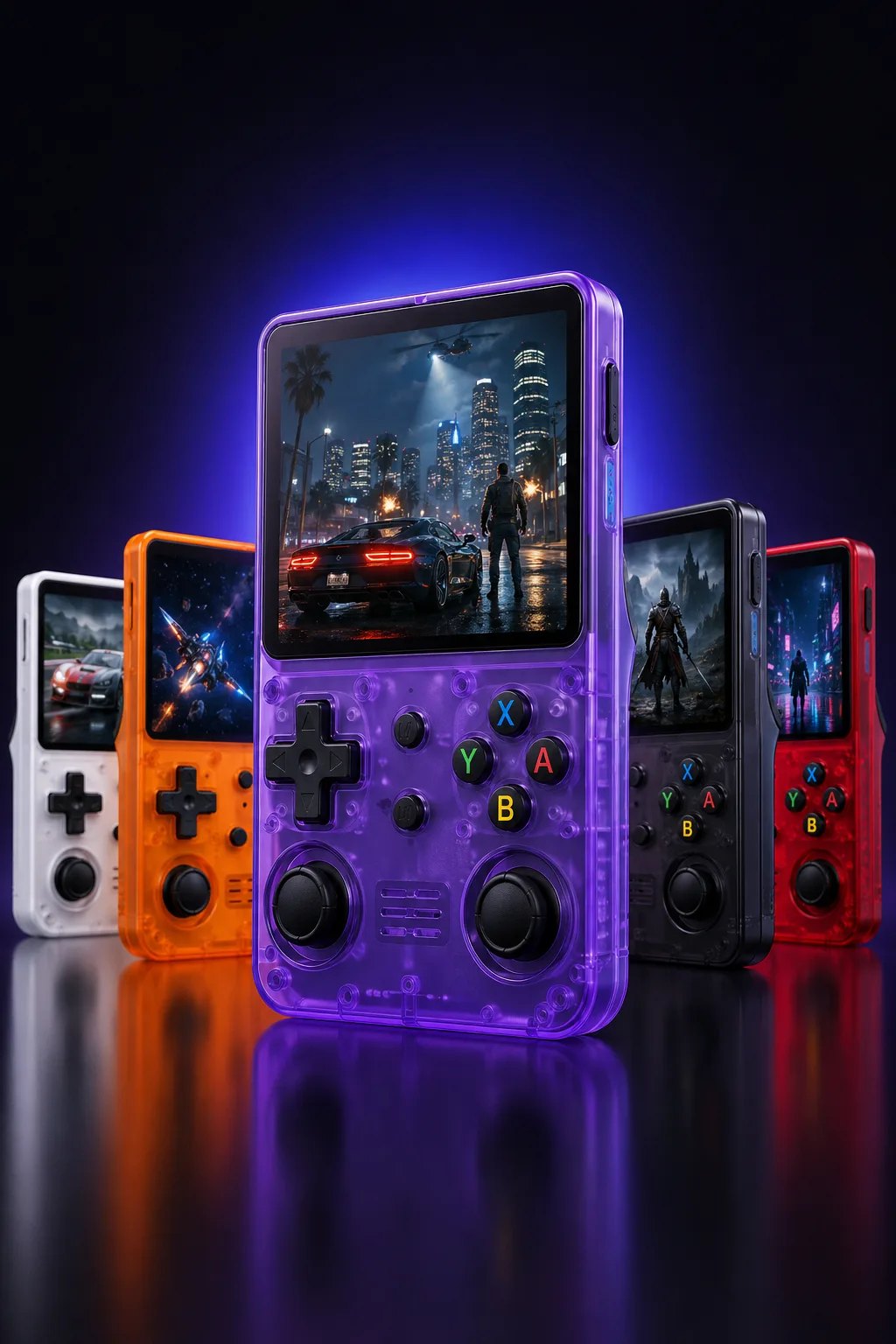
A mini console works the other way. It gives you a fixed destination, usually the couch, with a big screen and room for several people. The cost is the accessory tax: controllers, cables and sometimes a dock add up beyond the sticker price. Hybrid designs try to split the difference, and Switch 2 coverage shows that docked and portable play still involve trade-offs in size and capability.
What to pack or buy depends on how you play:
- Commuting: a spare battery and a hard case.
- Home TV play: an HDMI cable, a dock if your device supports one, and extra controllers.
- Travel with kids: headphones, a charger and a durable carry pouch.
Pro Tip: Count the accessories before you compare prices. A cheap mini console with two extra controllers often costs as much as a handheld that already has everything built in.
How do controls and multiplayer differ?
Handheld controls are fixed in place, so comfort depends on the design. A D-pad suits classic 8-bit and 16-bit games, while analog sticks help with 3D titles. Small buttons can tire your hands in long sessions, and that is the main ergonomic cost of a pocketable body.
Mini consoles shine when you play for hours or with other people. A full-size pad feels better in your hands, and local multiplayer is simple when everyone holds a controller.
- Handheld strengths: nothing to pair, nothing to lose, controls always in reach.
- Handheld limits: smaller grips, and two-player play often means sharing a tiny screen.
- Mini console strengths: roomy controllers, easy local multiplayer sessions, a big shared display.
- Mini console limits: every extra controller is an extra purchase.
Some handhelds close the gap by docking to a TV and pairing with external pads. Valve’s Steam Controller review points out that this flexibility comes with extra accessories and some added complexity.
What about performance and game libraries?
Raw power is where handhelds split into two camps. High-end handheld PCs can run modern games, but they ask for tuning, updates and settings tweaks. The Steam Deck OLED review shows that even strong handhelds improve through efficiency and battery refinements rather than brute speed, and they still involve trade-offs against higher-end PCs. A Windows Central comparison reaches a similar conclusion: handheld gaming PCs give up some performance for portability, while mini PCs offer stronger processing but need external peripherals.
Curated devices take the opposite path.
- Curated handhelds and mini consoles: the library is already on the device, there is nothing to install, and updates rarely get in the way.
- Installable systems: more freedom, but you manage storage, files and software.
- Retro focus: if old games are your goal, a ready-to-play device means you never hunt down files or set up a front end.
For retro fans, that simplicity matters more than speed. Older games do not need high-end hardware, so you gain little from paying for power you will not use. PCMag’s retro handheld roundup notes that retro play on the go narrows the field to dedicated retro handhelds and hybrids, which fits that logic.
Which device suits which kind of player?
Match the device to your habits, not to a spec sheet. Common player profiles:
- The commuter: pick a handheld with a battery that lasts a full trip, plus a spare.
- The parent or gifter: pick a handheld that works out of the box, with a clear warranty. Our guide for parents and our gift ideas that skip the setup cover this in more depth.
- The couch co-op player: pick a mini console and budget for at least one extra controller.
- The collector: pick whichever device handles the systems you care about, and think about long-term expandability.
- The non-technical buyer: pick a curated handheld that plays right away with no menus to build.
Pro Tip: If setup frustration is your biggest worry, choose a curated, ready-to-play device. PC-style handhelds carry hidden upkeep that surprises many first-time buyers.
If you are weighing a handheld against a Switch-style hybrid, our comparison for U.S. buyers breaks down the per-game cost side.
How much storage do you really need?
Storage works differently on each type of device. A curated handheld or mini console arrives with its library already stored, so capacity matters less on day one. You are buying a finished collection, not an empty drive.
Installable systems flip that. Every title you add uses space, and big modern games can fill a drive quickly. That is why expandable storage matters on those devices, and why a memory card slot is worth checking before you buy.
Retro games are tiny by comparison. Cartridge-era titles from the NES, SNES and Game Boy take up very little room, which is how a single small device can hold thousands of them. Our Retro Pulse adds dual microSD slots, so you can add games of your own on top of the preloaded library.
Here is a quick way to think about it:
- Preloaded library: you get a finished set, and extra storage is a bonus.
- Empty or small drive: plan to buy a card or external storage right away.
- Phone-based play: your photos and apps compete for the same space. Our phone emulation vs handheld breakdown explains why a dedicated device avoids that.
Whatever you choose, check how storage is added, how large a card the device supports, and whether the card is easy to reach. A slot hidden behind a screwed-on panel is a hassle you will notice the first time you swap it.
Why does convenience so often win for retro play?
My honest take: for retro games, convenience beats flexibility more often than people admit. Many of us love tinkering in theory, but when you finally sit down to play an older game, you want it running in seconds. A curated library with a removable battery and offline-first play removes the friction that makes people give up on a device. Ultimate flexibility is worth it only if you will really use it, and I would not overstate what a simple device does. It will not run modern titles, and that is fine.
— Sean
Where can you go next if a handheld fits?
If a handheld sounds right, we offer the Retro Pulse for people who want to play without a setup session. It comes preloaded with curated classic games across multiple systems, including NES, SNES, Genesis, PS1 and Game Boy. You get an IPS display, real D-pad and twin sticks, a removable battery, and offline-first play with no subscriptions.
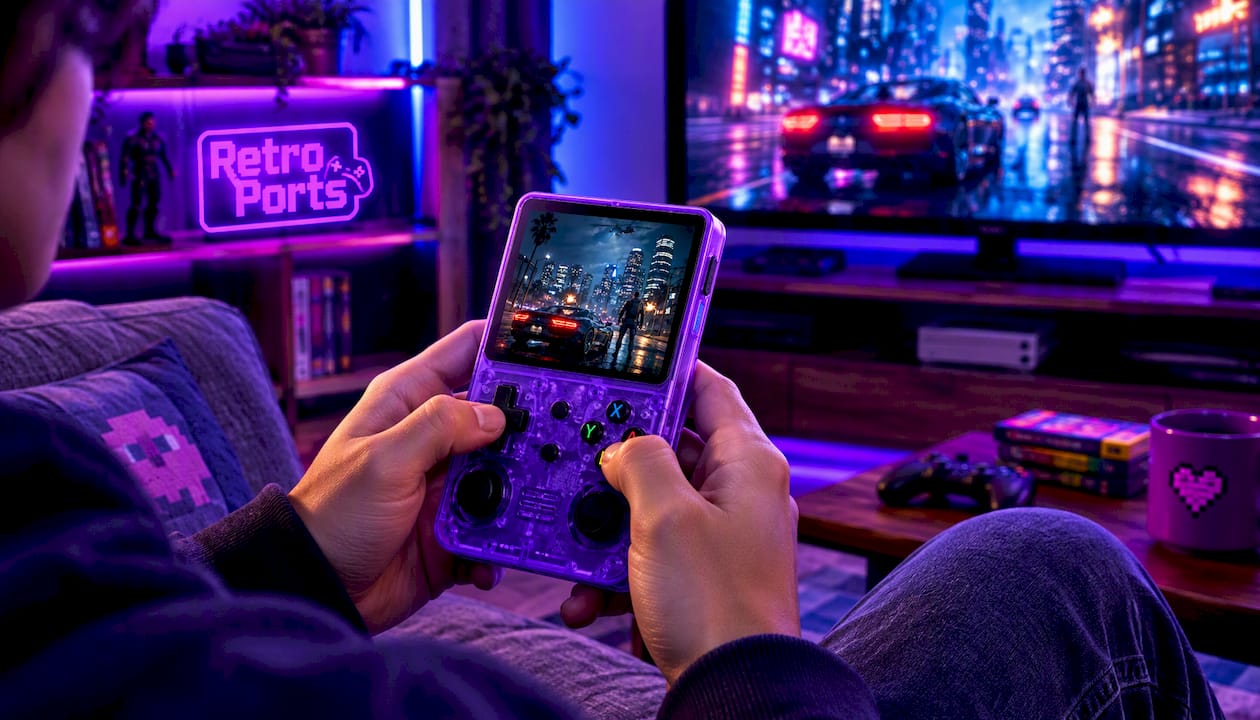
We ship from a U.S. warehouse, back every unit with a warranty, and accept returns. It suits parents sharing childhood favorites, commuters and retro fans who want minimal setup. See the Retro Pulse and order yours here.
FAQ
What is the best portable game console right now?
It depends on what you play. Hybrid and PC-style handhelds suit modern titles, while curated retro handhelds suit classic libraries with almost no setup. A Switch 2 review shows hybrids still balance portable and TV play with design trade-offs.
What is the smallest handheld device available?
Dedicated retro handhelds tend to be the most pocketable, since they skip the large screens and heavy batteries of PC-style models. Check the weight and screen size before buying, because a smaller body often means smaller controls.
What exactly is a gaming console?
A gaming console is a device built mainly to play games, usually connecting to a TV with its own controllers. Handheld consoles fold the screen and controls into one body, while mini consoles are compact, plug-in versions of classic home systems. The Computer History Museum traces how game hardware shrank from arcade cabinets to handhelds.
Is a handheld better than a mini console for kids?
Often yes, because a handheld needs no TV, cables or extra controllers. A mini console works well when the family plays together in one room, so the right pick depends on whether play is solo or shared.
Sources
- Gizmodo
- Should you get a handheld gaming PC or just a mini PC? | Windows Central
- The Best Retro Handhelds for 2025
- Nintendo Switch 2 review: exactly good enough | The Verge