A retro handheld costs anywhere from about $10 for a toy-grade novelty to well over $300 for a premium device, but most people get what they want in the lower-middle range. In testing published in July 2026, everything up to PS1, plus Dreamcast, already played under $80. The real question is not the sticker price. It is what you get for it: a console that works out of the box, with a library you can actually find your way around, and a battery and warranty you can count on. That is the thinking behind our Retro Pulse, which ships preloaded with 15,000 games from over 20 systems so there is nothing to set up.
TL;DR
- Retro handhelds run from under $20 for bargain listings to $300 and up for premium models. The price jumps that matter are where new systems appear, not where screens get fancier.
- Per the July 2026 RetroQuest Games data, under $80 covers the classic 8-bit, 16-bit and PS1 eras, and the over-$300 tier adds no new system.
- The sticker price is not the full cost: memory cards, game loading, shipping time and returns all change what you really pay.
- Retro Pulse comes preloaded with 15,000 games from over 20 systems, with a removable battery, a one-year warranty and 30-day returns, shipped from a U.S. warehouse.
Table of Contents
- What a retro handheld actually costs in the US
- Where extra money changes what you can play
- The costs the price tag leaves out
- Which price level fits which buyer
- Handheld, Switch or mini console: how the cost compares
- How to work out what you will really pay
- Retro Pulse for people who want to skip the setup
- Our view on what retro handhelds should cost
- FAQ
- Sources
What a retro handheld actually costs in the US
Search the web and you will see prices that look like they come from different planets: a $5 mini console with a few hundred built-in games, a $130 mid-size device, a $179 Android-style handheld, and a $789 PC-class machine. All of them get called “retro handhelds.” They are not the same product.
It helps to sort them into three rough bands.
| Band | Typical spend | What it plays |
|---|---|---|
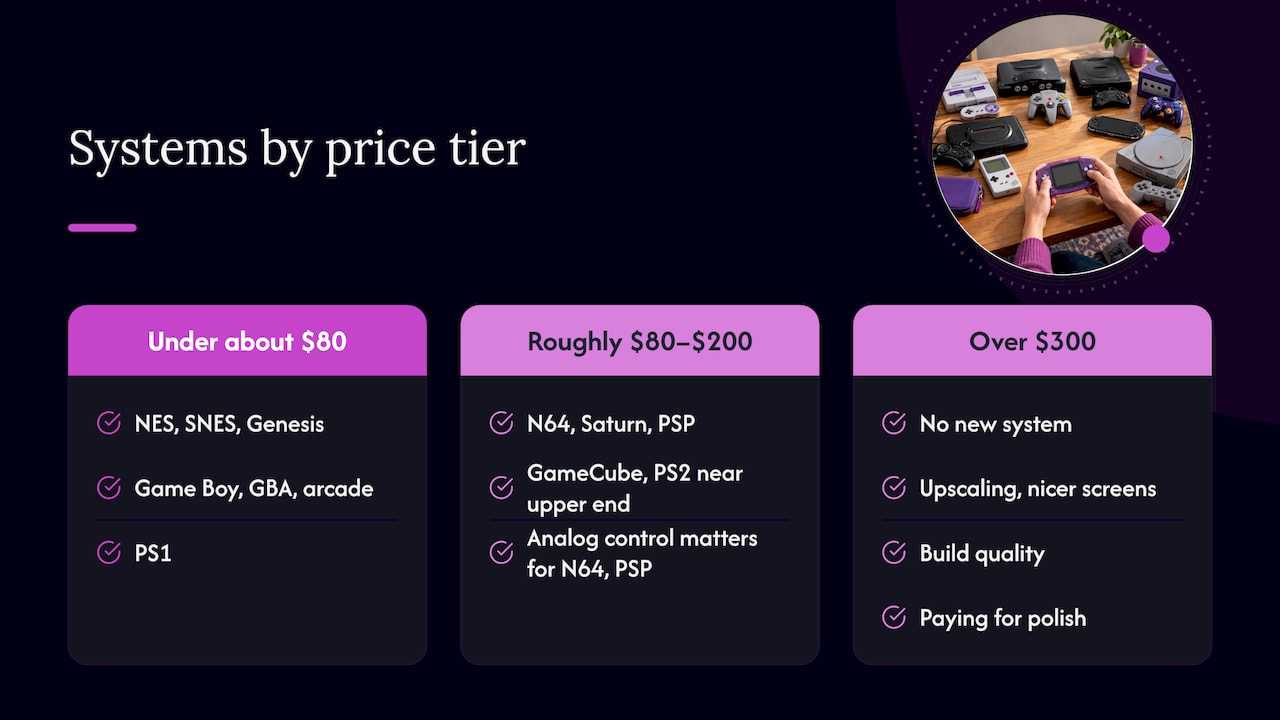
| Budget | Under about $80 | NES, SNES, Genesis, Game Boy and GBA games, arcade, and PS1 |
| Midrange | About $80 to $200 | Everything above, plus N64, Saturn, PSP, and in some cases GameCube and PS2 |
| Premium | $300 and up | The same libraries with stronger screens, build quality and upscaling, or full PC gaming |
These bands follow the structure in RetroQuest Games’ July 31, 2026 analysis of 138 tested combinations across 18 devices. Specific street prices shift with sales, supply and chip costs, so treat the bands as a map and check the live listing before you order.
Why the bottom of the market is so cheap
Very low listings, the ones under $20, are usually basic devices with small screens, weak controls and little quality checking. Some arrive after weeks of shipping from overseas. A low price is only a good deal if the thing turns on, charges and feels right in your hands. A $12 device that you stop using after a weekend cost more per hour of play than a well-built console you keep for years.
Sale prices versus the usual price
Retro handhelds are heavily discounted, and “76% off” banners are common. A discount is only meaningful against the price the device normally sells for. Compare the sale price to the 90-day price history where a store shows one, and compare devices with the same system list and the same screen size. Prices can also rise: in July 2026, GamesRadar reported that Qualcomm chipset price increases could push up prices on higher-end Android-based retro handhelds, and it pointed to a pocket-size model at $64.99 and a budget model at $46.99 as lower-cost options at that time. Those figures belong to July 2026 and will have moved since.
Where extra money changes what you can play
The most useful insight from the testing data is that price does not climb smoothly with capability. There are jumps and there are plateaus.
Under about $80. This is where classic gaming lives: NES, SNES, Genesis, Game Boy, GBA, arcade and PS1. If your memories are of cartridges from the 8-bit and 16-bit eras, or the first PlayStation, you do not need to spend more to play them.
Roughly $80 to $200. This is the band where new systems appear: N64, Saturn, PSP and, toward the upper end, GameCube and PS2. Another $50 here changes what you can play. These systems need real processing power and, for N64 and PSP, a second analog stick or good analog control. If those are your childhood systems, this is the band worth paying for. Our guide to dual analog handhelds built for N64 and PSP explains why the controls matter as much as the chip.
Over $300. According to the same testing, this tier adds no new system. You pay for upscaling, nicer screens and build quality. Those are real improvements, but if you want the games and not the spec sheet, you are paying for polish.
The takeaway: decide which systems you want first, then find the cheapest well-built device that plays them. Do not pay for a tier that adds nothing to your list.
The costs the price tag leaves out
Before you compare numbers, add up the things a listing rarely states.
Games and memory
A bare handheld is only half a product. Some arrive empty, and you have to buy a microSD card, then find and copy games onto it, and sort out folders and settings yourself. That is time as well as money. Devices that arrive preloaded avoid the shopping, the file wrangling and the menu fiddling. If you are buying for a child, a parent or a friend who just wants to press a button and play, preloaded matters more than almost any spec. Our retro handheld buying guide walks through this in more detail.
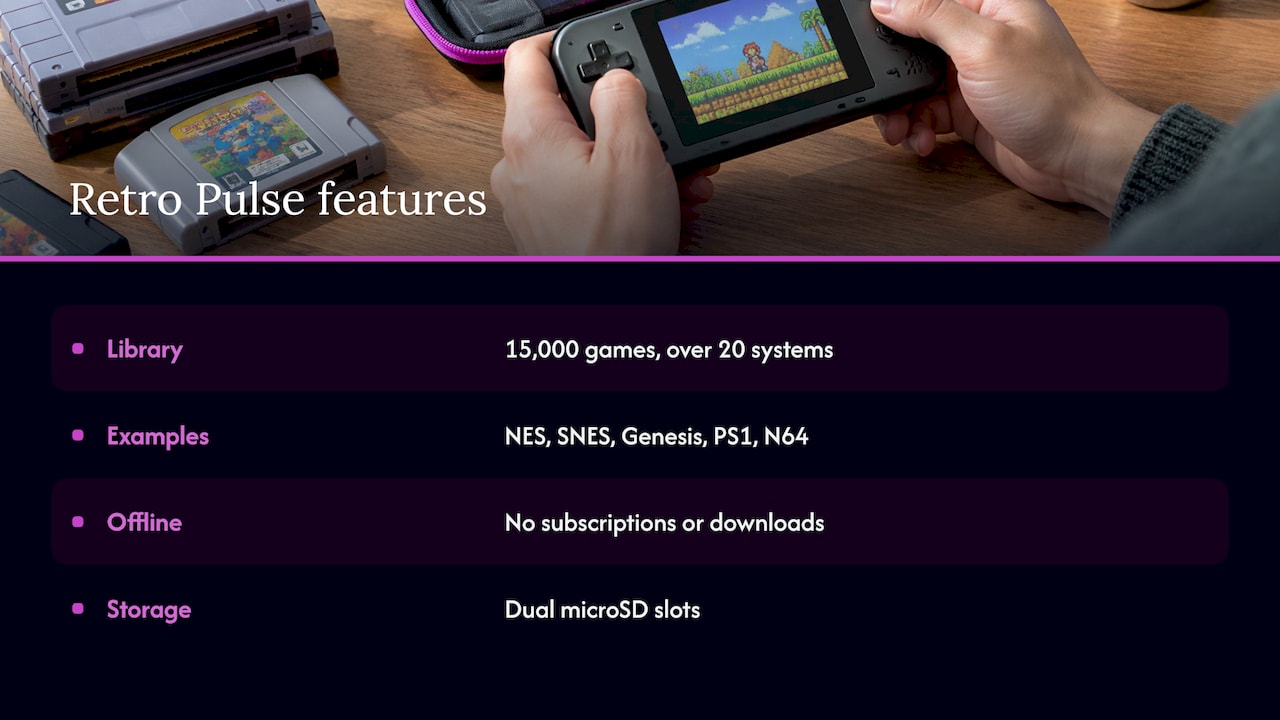
Retro Pulse is preloaded with 15,000 games from over 20 systems, including NES, SNES, Genesis, PS1, N64, Game Boy, GBA and arcade, and it works offline with no subscriptions or downloads. It also has dual microSD slots if you want to add your own games later.
Battery life
A cheap handheld with a sealed battery that fades is a device with a built-in expiry date. A removable battery lets you swap or replace it and keep playing. Retro Pulse has a removable battery with 6 to 8 hours of play and USB-C charging, which suits commutes, car rides and long flights.
Shipping time and returns
Many of the lowest prices come from overseas sellers, with long waits, uncertain quality and a hard process if something is wrong. A U.S. warehouse, a one-year warranty and a 30-day return window are part of what you are buying. Retro Pulse ships from a U.S. warehouse and carries a one-year warranty and 30-day returns.
The screen and the controls
A handheld you play for an hour a day needs a screen you can read and controls that do not hurt. A 3.5-inch IPS display is a sensible size for pocketable retro play, and real D-pad, sticks and shoulder triggers matter for the games you will actually play. Our page on retro handheld screen quality explains which screen specs matter and which are marketing.
Which price level fits which buyer
Retro gamers who want nostalgia without setup. You want to open the box and play Super Mario or Sonic within a minute. A preloaded device with a curated library saves the afternoon of downloads and menus. Cost per game is also tiny: 15,000 games on one device.
Parents sharing childhood games. You need something sturdy, simple and safe to hand over. Look for a robust build, a battery that lasts a school-day trip, and a return policy in case it does not suit. Our retro handheld comparison for parents covers what to look for.
Commuters. Battery life and pocket size are the criteria. A removable battery with 6 to 8 hours covers a week of commutes on a charge or two, and offline play means no signal needed on the train.
Students. The budget is tight, so the question is hours of fun per dollar. A single device with a huge library beats buying games one at a time. If you are weighing a console against a phone, see phone emulation versus a handheld.
Gift buyers. A gift has to work the moment it is unwrapped. Preloaded, tested and returnable are the three things to look for. It is also a gift that suits a wide age range, from a kid to a parent who remembers the originals.
Handheld, Switch or mini console: how the cost compares
If you are comparing a retro handheld with other ways to play, the cost structure is different. Modern consoles often charge per game, which adds up quickly if you want a wide library. A retro handheld with a built-in library is a one-time purchase for thousands of classics. Our comparison for U.S. buyers weighing a Switch against a retro handheld goes through the per-game math. If you mostly play on the couch, mini consoles versus handhelds shows when a TV-connected device makes sense and when portability wins.
If you are wondering whether emulation handhelds are worth the money at all, our honest buyer’s guide lays out what you get at each level.
How to work out what you will really pay
Use this short routine before you order anything.
- List the systems you want. Write down the consoles you grew up with, or the ones your kids will want. If the list stops at PS1, you do not need a premium device. If it includes N64 or PSP, plan for the midrange.
- Check whether games are included. Preloaded means the price is the price. Empty means you add a memory card and the time to fill it.
- Look at the battery. Removable and swappable is better than sealed. Check the stated hours of play and the charging port.
- Check the controls. If you want N64 or PSP games, look for two analog sticks and shoulder triggers.
- Look at where it ships from. A U.S. warehouse usually means shorter waits and easier returns.
- Read the warranty and return terms. A one-year warranty and a 30-day return window mean you are not stuck with a mistake.
- Compare the sale price to the usual price, not to the crossed-out number on the banner.
Retro Pulse for people who want to skip the setup
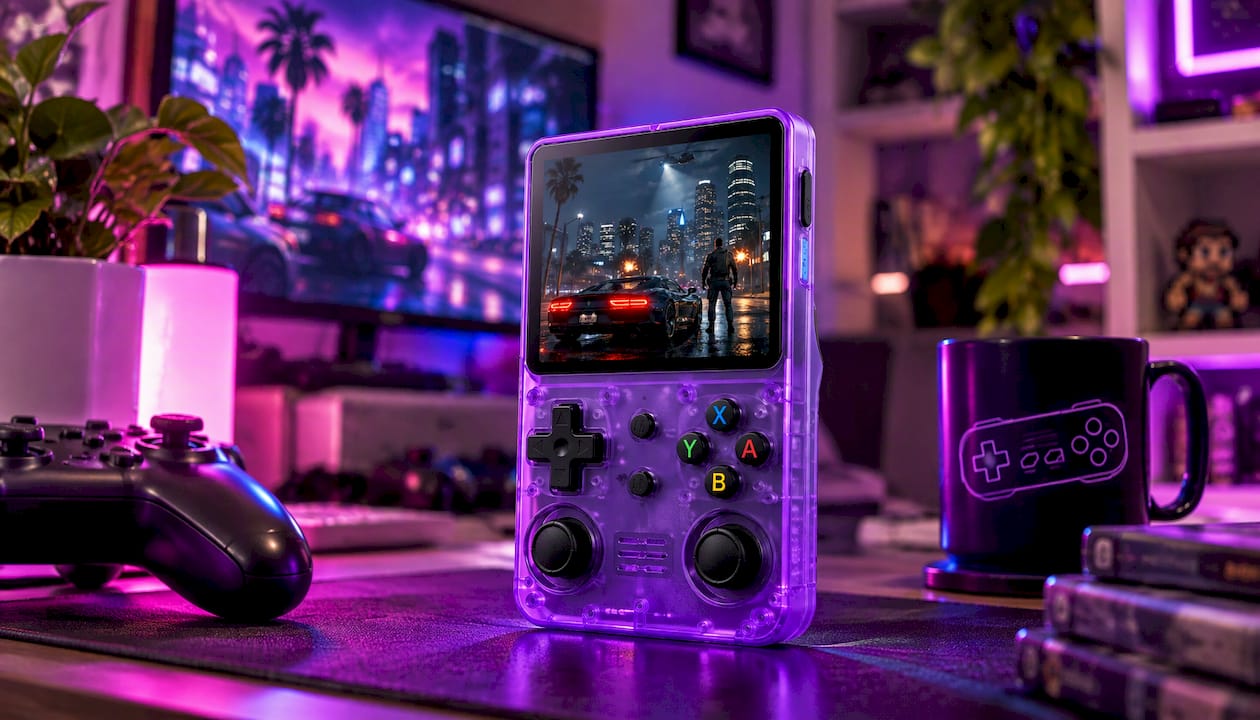
Retro Pulse is our handheld: 15,000 classic games from over 20 systems, a 3.5-inch IPS display, a real D-pad, twin sticks and L/R triggers, a removable battery, USB-C charging, dual microSD slots, and offline-first play. It ships from a U.S. warehouse, comes with a one-year warranty and 30-day returns, and is ready to play the moment you turn it on. You can see the current price and order on the Retro Pulse product page.
Our view on what retro handhelds should cost
We think the right way to price a retro handheld is by the hour of enjoyment you get, not by the number on the box. A very cheap device that arrives late, feels flimsy or needs an evening of setup is not cheap once you count your time.
That is why we built Retro Pulse around a curated, preloaded library. You turn it on and you play. You do not hunt for files, build menus or pay a subscription. The games you love from the NES, SNES, Genesis, PS1, N64, Game Boy and arcade eras are already there, and if you want to add more, the dual microSD slots are there too.
We ship from a U.S. warehouse so you are not waiting weeks for a package, and we stand behind the console with a one-year warranty and 30-day returns. The removable battery gives you 6 to 8 hours, and when it eventually wears down, it is a battery swap, not the end of the device.
Parents tell us the same thing we hear from every retro fan: the best part is handing over something that just works and watching a kid discover the games you grew up with. That is the value we are aiming for.
Sean
FAQ
What is the cheapest retro handheld?
Bargain listings can fall under $20, and some novelty devices sell for even less. At that level, expect small screens, basic controls and uneven quality. For classic systems through PS1, the sweet spot is the budget band under about $80, where testing shows those libraries are covered.
How do I get games onto a retro handheld?
It depends on the device. Some need a microSD card that you fill yourself, while others arrive with games already installed. Retro Pulse arrives preloaded with 15,000 games and has dual microSD slots if you want to add your own later.
Does spending more get me more games?
Only up to a point. Under $80 already covers systems through PS1. The $80 to $200 band adds systems such as N64 and PSP. Above $300, the same testing found no new systems, only better screens, upscaling and build quality.
Are handheld prices going up?
They can. In July 2026, GamesRadar reported that chipset price hikes could push up prices on some higher-end retro handhelds. If you already know what you want, check the live price on the product page.
Sources
- What each price tier actually buys you, RetroQuest Games
- Retro handhelds could be in for a world of price pain, GamesRadar