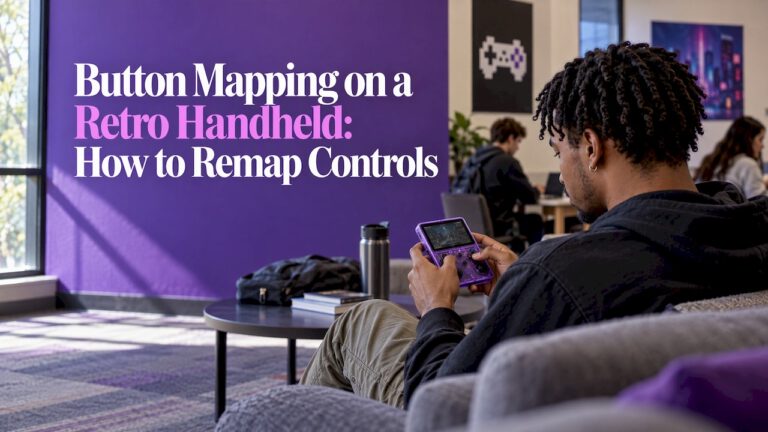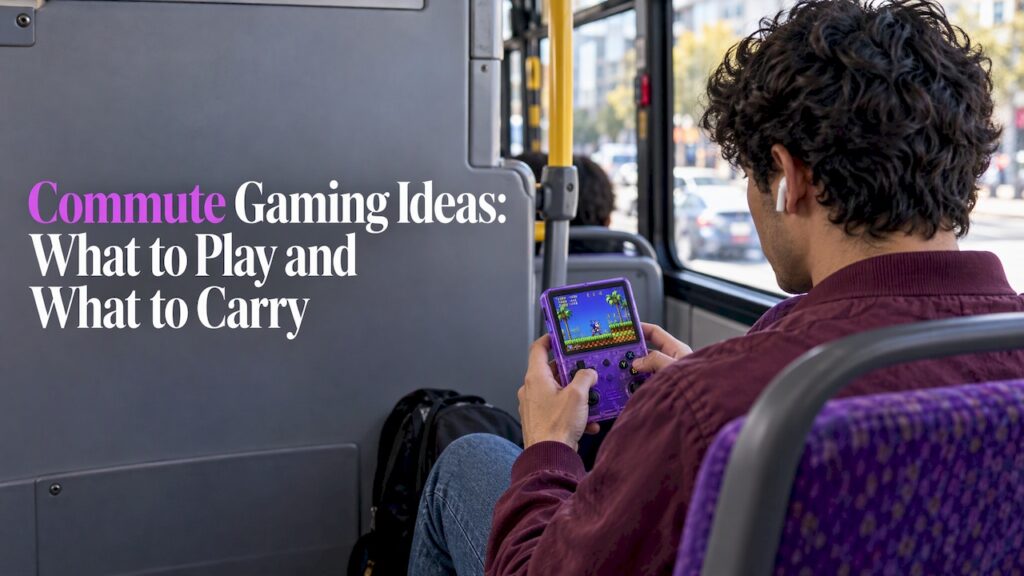
The best commute gaming setup is a pocket-sized device with real buttons, a game library that works with no signal, and sessions you can stop at any stop. Retro Pulse, our handheld with 15,000 preloaded classic games from over 20 systems, is built around exactly that: it plays offline from the second you power it on, with no downloads, menus to configure or subscriptions. Below you will find how to match a game to your commute, ideas by ride length, and what to check before you head out.
TL;DR
- A commute game needs short rounds, easy stopping, offline play and controls that work with one hand free for a rail or a coffee.
- Match the game to the ride: 5 to 10 minutes calls for arcade-style rounds, 30 minutes or more suits puzzle and adventure classics.
- Retro Pulse ships with 15,000 games from NES, SNES, Genesis, PS1, N64, Game Boy, GBA and Arcade, all playable offline, with a 6 to 8 hour removable battery.
- Parents can share their childhood games with kids in a compact format, and gift buyers get a ready-to-play device with a 1-year warranty and 30-day returns.
- Stay aware of your stop, keep volume manageable, and never play while driving.
Table of Contents
- What makes a game work on a commute
- Match the game to the length of your ride
- Why offline matters more than most people expect
- What to carry: a handheld built for the commute
- Commute gaming for specific readers
- Perspective
- Make your commute your game time
- FAQ
- Sources
What makes a game work on a commute
Most lists of commute games agree on the same short checklist. One commute guide from Hamster Jam says a good commute game has short levels or quick rounds, can be paused without penalty, works offline, uses simple controls and avoids stressful timers. Playtua’s commute guide adds that the game should stay quiet and go easy on the battery.
Turn that into five questions you can ask of any game or device:
- How long is one round? Under five minutes is ideal for a bus ride with several stops.
- How fast can you stop? Your stop arrives on its own schedule, not the game’s.
- Does it need a signal? Tunnels, underground platforms and rural stretches drop connections.
- How many hands does it need? Standing passengers often have one hand on a rail.
- Will the battery last the week? A dead device on the way home is the most common commute gaming failure.
Offline play deserves the most attention. Plenty of games that look standalone still reach for the internet. PCGlance notes that being installed, free or single-player does not guarantee a game opens without internet, and that offline play and online progress sync are separate features. A device built around a library stored on the device removes that whole category of surprise. That is the logic behind Retro Pulse: it is offline-first, so the games you carry are the games you can play on a train in a tunnel.
Match the game to the length of your ride
Session length is the part most guides skip. Playtua gives useful examples for phone games: Flappy Bird attempts last 10 to 60 seconds, a sliding-number puzzle takes 2 to 5 minutes, and Spider Solitaire runs 15 to 25 minutes. The pattern holds for any platform: pick games whose natural unit of play is shorter than the gap you have.
| Your commute | What fits | Classic genres on Retro Pulse’s systems |
|---|---|---|
| Under 10 minutes (short bus hop, one subway stop) | Single rounds, score chasing, one-screen challenges | Arcade cabinet games, Game Boy puzzle games, quick racing and fighting rounds |
| 10 to 30 minutes (typical train or bus ride) | A level or two, a few matches, a puzzle set | NES and SNES platformers, Genesis action games, sports and versus games |
| 30 minutes or more (long rail commute) | Longer adventures, role-playing games, builders | SNES and PS1 role-playing and adventure games, GBA classics, N64 exploration games |
With 15,000 games across those systems, you can keep one short-round game for the walk to the platform and a longer adventure for the long leg of the trip, without swapping devices or downloading anything. If you want a gentle starting point, our list of 12 easy retro classics for beginners is written for people who have not played these games in years.
Short rounds for stop-and-go rides
Arcade-style games were designed around short sessions: you play until you run out of lives, then start again. That structure suits a bus that stops every few blocks. Fighting and versus games also work well in pairs. We put together seven retro fighting games you can be playing within minutes of unboxing.
Other lists point the same way. HowToGeek’s five-minute break picks highlight games with self-contained sessions of a couple of minutes, such as Dadish levels and two-minute Rocket League Sideswipe matches. Retro arcade and platformer rounds fill that same slot, with physical buttons instead of a touchscreen.
Puzzle games for crowded, jolting rides
A packed carriage is not the place for split-second reflexes. Hamster Jam’s team argues that untimed, calming sort-and-puzzle games suit a crowded carriage, and that solvable levels let a short ride end on a small win. Classic block-dropping, matching and logic puzzles on Game Boy and GBA fit this brief. If you like to understand why calm puzzle play appeals, the benefits of puzzle games for your mind are worth a read before you pack your bag.
Longer adventures for the long haul
If your ride is 45 minutes or more, you have room for something with a story. Role-playing games and adventure classics from SNES and PS1 reward a regular daily window: 40 minutes each way is a chapter a day. Our Retro Pulse beginner picks include easy starting points, and the dual microSD slots let you add more games if you ever finish what is on the device. We cover that in adding games to a retro handheld.
Why offline matters more than most people expect
Signal drops are the ordinary condition of commuting, not an edge case. Phone games can handle it with preparation. Torpedo’s offline iPhone checklist tells commuters to update games on reliable Wi-Fi, open each game once online so cloud saves sync, enable Low Power Mode and pack headphones. Pocket-lint says that for Android the store or official description is the way to find out whether a game plays offline, and that games with an upfront fee are more likely to work without a connection.
That is a lot of pre-commute housekeeping for a 20-minute ride. A device whose whole library lives on it needs none of it. Our guide to what works offline and what does not goes deeper on the difference between games that are installed and games that are truly self-contained.
What to carry: a handheld built for the commute
Here is how Retro Pulse lines up against the five commute questions above.
- Round length: the library is classic games from the arcade and console era, many of which were designed around short sessions.
- Offline: offline-first operation, so no signal is needed to play.
- Controls: a real D-pad, twin sticks and L/R triggers, so you are not covering the screen with your thumbs.
- Screen: a 3.5" IPS display, a size that fits a coat pocket and a bag’s front pouch.
- Battery: a removable battery with 6 to 8 hours of life and USB-C charging. For a 40-minute commute each way, that covers several days between charges.
A removable battery is also practical for heavy users: it extends playtime on long travel days. If you ever have heat concerns in a bag or on a sunny window seat, our guide to handheld overheating and battery safety covers six safe fixes.
Quiet play on shared transport
A commute is shared space. Headphones are the courtesy, and keeping the volume reasonable also helps you hear announcements. Our pages on quiet handheld gaming and distraction-free gaming explain how to play without the noise, and why an offline device with no notifications keeps a short ride from being interrupted.
Playing safely while you travel
Play only as a passenger on a train, bus or subway, never while driving, cycling or walking along a street. Set an alarm or keep the route display in view for your stop, and keep the device zipped away when you board or leave a crowded platform. Keep the volume low enough that you can hear station announcements.
Commute gaming for specific readers
Retro gamers who want nostalgia without setup
You have probably started a retro setup before and stalled at file folders, controller mapping or a blank game list. Retro Pulse is preloaded and ready to play the second you power on, with no menu setup, downloads or subscriptions. If you are weighing a handheld against emulating on your phone, we compared them in phone emulation versus a handheld.
Parents sharing childhood games with kids
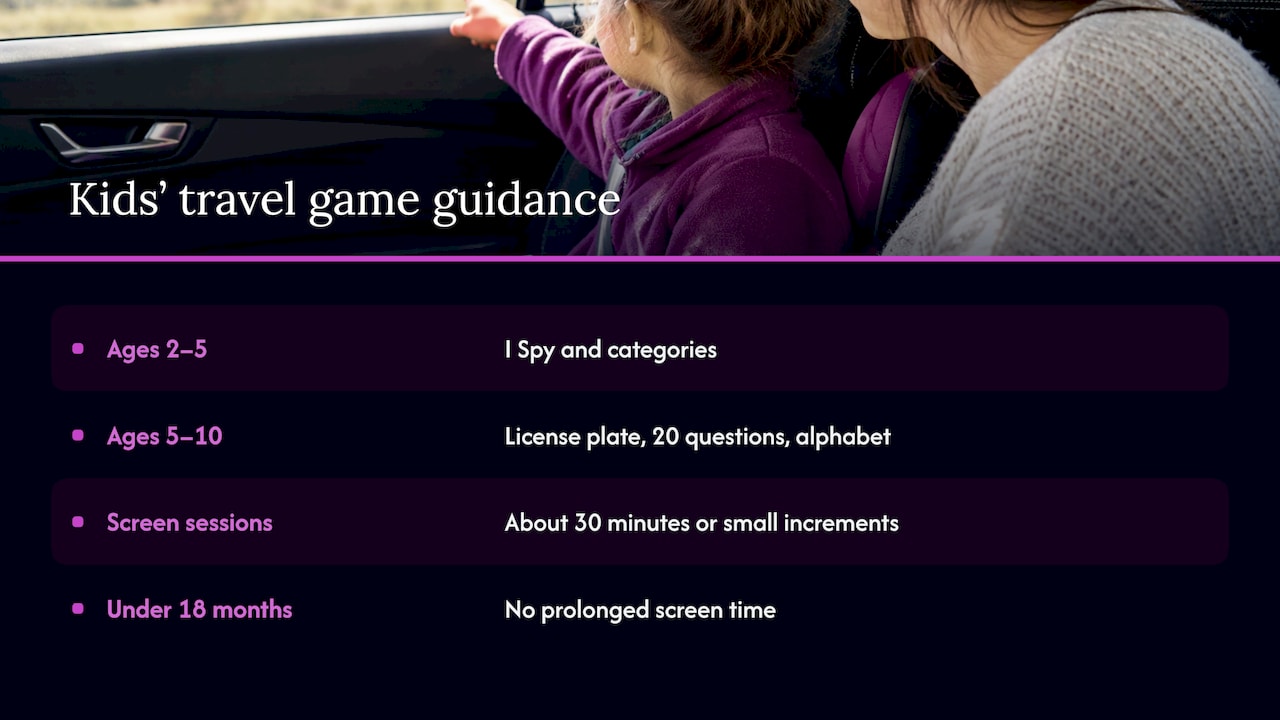
Parents often want to hand a child the game they loved at the same age. For young kids, the American Academy of Pediatrics’ HealthyChildren.org sorts screen-free travel games by age: I Spy and categories for ages 2 to 5, and the license plate game, 20 questions and the alphabet game for ages 5 to 10. Those are good companions for the same ride.
For screen time, Pathways.org recommends games that take about 30 minutes or can be broken into small increments so parents can set boundaries, and notes that children under 18 months should not have prolonged screen time. Retro games fit that approach: short rounds, clear stopping points and no ads or in-app purchases to negotiate. For family trips, see our offline travel games for kids and, for two players, local multiplayer handhelds.
Students on a budget
A single device with 15,000 games means you are not buying game by game. Our comparison of a Switch and a retro handheld sets 15,000 games against per-game costs for U.S. buyers. Check the product page for the current price.
Gift buyers
A gift for a commuter should work out of the box. Retro Pulse needs no accounts or downloads, ships from a U.S. warehouse, and carries a 1-year warranty and 30-day returns. That makes it a low-effort gift for a parent, a student or a friend who talks about the games they grew up with.
Perspective
Most commute gaming advice starts from the phone and then adds rules: download this first, turn off that, check the airplane-mode behavior. We start from the opposite end. The commute has a shape: short windows, one free hand, no signal and a stop you cannot miss. The best device for it is the one that asks for nothing before you press start.
That is why we built Retro Pulse around a curated library and an offline-first design. Real buttons keep your hands where they belong, the removable battery keeps the week going, and the games are the ones people remember, so there is no learning curve on a crowded train. We also ship from a U.S. warehouse, so you are not waiting weeks for a handheld that should have been in your bag already.
If you want a commute you look forward to, pick a device that makes the first minute as good as the twentieth.
Sean
Make your commute your game time
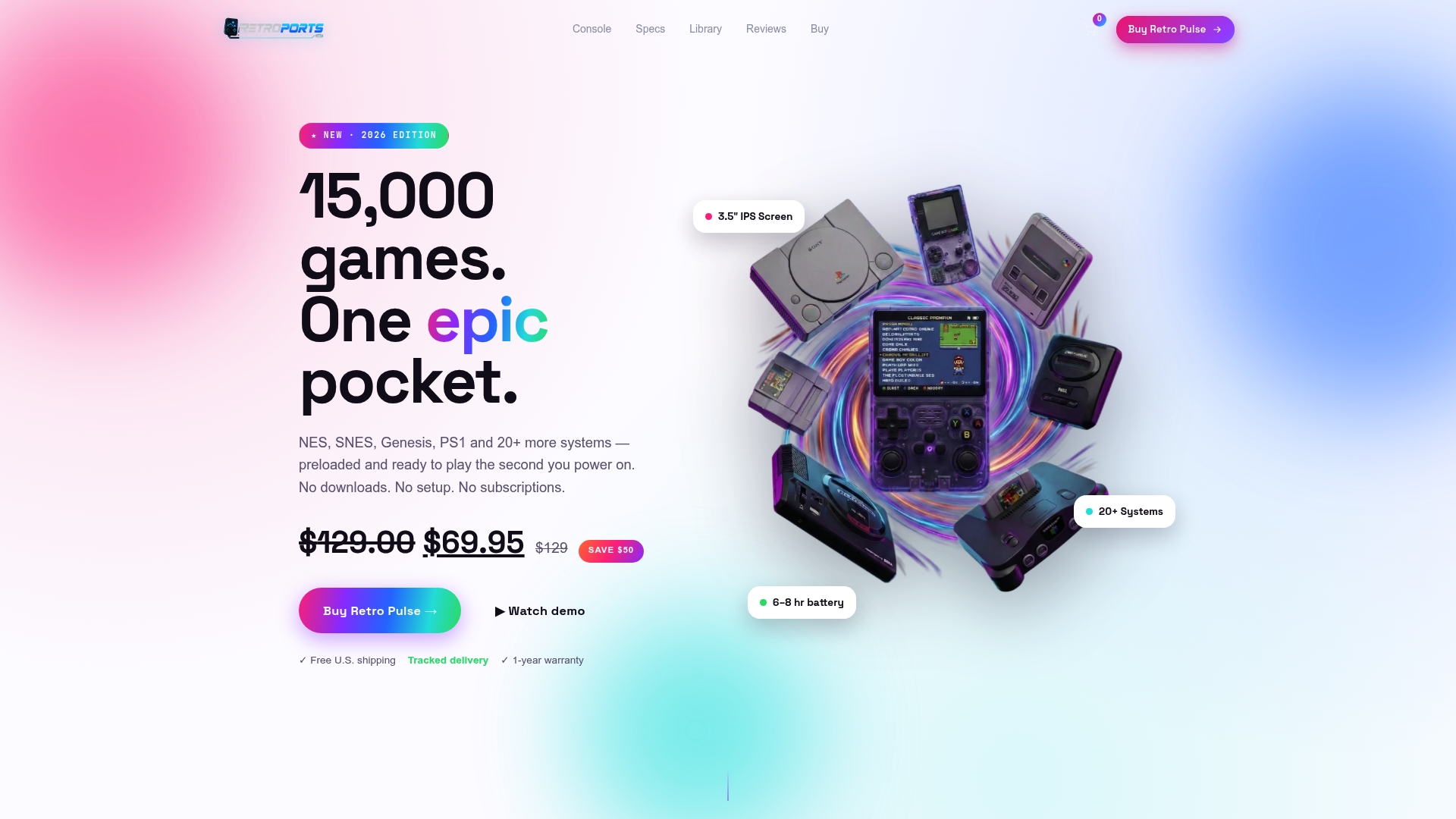
Retro Pulse is a handheld with 15,000 preloaded classic games from over 20 systems, a 3.5" IPS display, real D-pad, twin sticks and triggers, a removable 6 to 8 hour battery and USB-C charging. It plays offline, has dual microSD slots for adding games, and comes with a 1-year warranty and 30-day returns.
See the Retro Pulse handheld or browse all handhelds for current pricing and bundles.
FAQ
What kind of games are best for a commute?
Choose games with short rounds, instant stopping, offline play and simple controls. Classic arcade, platformer and puzzle games fit well because they were built around quick sessions. Keep a longer adventure for the longer legs of your trip.
Can I play games on a commute without internet?
Yes, if the games live on your device. Retro Pulse is offline-first, so its preloaded library plays with no signal, in tunnels or underground. For phone games, PCGlance warns that installed or free does not always mean offline.
How long will a handheld battery last on a commute?
Retro Pulse’s removable battery is rated at 6 to 8 hours, and it charges over USB-C. For a 30 to 40 minute commute each way, that is several days of play between charges. Battery life varies with brightness and the games you play.
Is a retro handheld a good commute gift?
Yes. It is ready to play out of the box, needs no downloads or subscriptions, and is small enough for a coat pocket. Retro Pulse also includes a 1-year warranty and 30-day returns.
Is it safe to play games while commuting?
Play as a passenger only, never while driving or crossing streets. Keep an eye on your stop, and use headphones at a low volume so you can still hear announcements.
Sources
- Best Short Games for Your Commute (Hamster Jam)
- Best Games for Commute (Playtua)
- The Best Mobile Games to Play on a 5-Minute Break (HowToGeek)
- Offline Android Games You Can Play Without Wi-Fi (PCGlance)
- 20 Best Offline iPhone Games (Torpedo)
- How to play Android games offline (Pocket-lint)
- Screen-Free Road Trip Activities for Kids (HealthyChildren.org)
- Choosing the Perfect Game for Family Game Night (Pathways.org)
- Benefits of puzzle games for your mind