Pick a gift that matches how they use retro games. Someone who still plugs in a console every weekend wants a playable handheld or plug-and-play device; someone whose collection sits behind glass wants display pieces and curated memorabilia. If you’re unsure and want something ready out of the box, a preloaded handheld like Retro Pulse skips the setup entirely.
TL;DR:
- Ready-to-play handhelds like Retro Pulse eliminate compatibility guesses and come preloaded with thousands of games, making them ideal for instant use.
- Display collectibles such as LEGO-style sets or framed pixel art appeal more to collectors and are better suited as unique shelf pieces rather than duplicates.
- Practical accessories like wireless controllers, HDMI upscalers, and cartridge storage cases address specific annoyances and enhance the retro gaming experience.
- Low-cost items such as heat-changing mugs, pins, and keychains work well as stocking stuffers and add a personal touch when paired with a game-specific note or card.
- Matching the gift to the recipient’s gaming habits and avoiding duplicate hardware or unverified products ensures meaningful, well-received retro gaming presents.
Table of Contents
- Best Retro Gaming Gift Ideas for Players
- Display and Collector-Worthy Retro Gaming Gifts
- Accessories and Controllers That Improve Retro Play
- Small Retro Gaming Gifts and Stocking Stuffers
- Quick Scan: Retro Gaming Gifts by Budget
- How to Choose the Right Retro Gaming Gift
- Why a Ready-to-Play Handheld Often Wins as a Gift
- Matching the Gift to the Type of Retro Gamer
- What Actually Matters When Buying These Gifts
- Get Retro Pulse: The Handheld That Skips the Guesswork
- Sources
- FAQ
Best Retro Gaming Gift Ideas for Players
Playable gifts split cleanly by budget and by how much fiddling the recipient wants to do. A plug-and-play console under $30 suits someone who wants nostalgia without commitment. A dedicated handheld in the $60 to $150 range suits someone who actually games on commutes or downtime. A DIY kit suits a tinkerer who enjoys the build as much as the play.
Compatibility matters more here than in any other gift category. Check whether the device outputs to a TV via HDMI or composite, whether it ships with real controllers or expects a Bluetooth pairing, and whether cartridge-based systems match the recipient’s region (PAL versus NTSC still trips people up). A device that needs a manual to configure defeats the point of a gift meant to feel effortless.
- Budget plug-and-play console (under $30): A single-cord retro console preloaded with a fixed library. Best for a casual player who wants five minutes of nostalgia on a lazy Sunday, not a deep session.
- Mid-range handheld with a curated library: Devices like Retro Pulse come preloaded with thousands of games across more than 20 systems, so there’s no downloading or account setup. Best for commuters, students, or a parent who wants to hand a kid something that just works.
- Premium handheld with dual card slots: For someone who wants to add their own ROM libraries later without hacking the firmware. Best for a hobbyist who already knows their way around emulation but wants better hardware than a phone.
- Mini arcade cabinet (tabletop size): A shrunk-down cabinet with a joystick and buttons, usually loaded with arcade classics. Best for someone with desk space who wants the feel of an arcade, not just the games.
- Full-size home arcade cabinet (splurge tier): These run into the hundreds or low thousands of dollars and need real floor space. Best for a collector who has already outgrown handhelds and wants a centerpiece.
- Raspberry Pi DIY retro console kit: Cheap on paper, but the real cost adds up fast once you add a power supply, case, storage card, and controller. Best for someone who wants a weekend project, not someone who wants to play tonight.
- Modded classic console (pre-owned market): A refurbished original console with HDMI mods. Best for the purist who wants original-hardware feel with modern convenience. Verify the seller’s return policy before buying used electronics.
The real fork in the road, according to people who study this closely, is whether the recipient values authentic original-hardware controls or the convenience of emulation and modern handhelds. A purist wants an original D-pad under original plastic. A pragmatist wants thousands of games on one device and doesn’t care which chip is running them.
Display and Collector-Worthy Retro Gaming Gifts
Display gifts solve a problem playable gifts can’t: they almost never duplicate something the recipient already owns. A collector who has three consoles gathering dust doesn’t need a fourth. They do want something new to put on a shelf, and that’s where framed art, LEGO-style models, and dioramas earn their keep.
- LEGO-style console or scene sets (mid-range, $40 to $130): Large builder sets modeled after classic games have become genuinely popular with adult collectors, and reviewers note these appeal more broadly to grown collectors than another piece of playable hardware they may already own. A Question Mark Block set or similar centerpiece works as a single standout gift rather than a pile of small accessories.
- Framed pixel art or cartridge art prints ($20 to $80): Look for licensed prints rather than uncredited fan reproductions, and measure the recipient’s wall space before ordering anything larger than 16 by 20 inches.
- Handmade dioramas or shadow boxes ($30 to $150): Small 3D scenes recreating a specific game level. These work best for someone whose favorite game is specific and well known, so the reference actually lands.
- Display cases for existing cartridges or figures ($15 to $60): A practical upgrade for anyone who already has loose collectibles sitting in a drawer.
One collector, one premium item beats several small gadgets almost every time. If you’re torn between a $60 accessory and a $60 display centerpiece for someone who already owns three consoles, go with the centerpiece. Check hanging hardware and wall anchors before gifting anything framed. Cheap sawtooth hangers on a heavy print are a fast way to turn a gift into a repair job.
Accessories and Controllers That Improve Retro Play
Good accessory gifts solve a specific annoyance rather than adding another gadget to the pile. That’s the test worth applying before buying: does this fix something the recipient complains about, or does it just sit in a drawer?
- Wireless retro-style controllers: Modern Bluetooth pads styled like original SNES or Genesis controllers solve the “one USB port, three people” problem at game night. Confirm the controller supports the recipient’s actual console or emulator setup before buying; not every wireless pad works with every system.
- HDMI adapters and upscalers: Older consoles output composite video that looks rough on modern 4K TVs. An upscaler cleans up the image significantly, though budget models can introduce input lag that competitive players will notice immediately.
- Pixel art speakers and desk decor: Small speakers shaped like 8-bit hearts, mushrooms, or ghosts have become a genuinely popular mid-range gift because they function as both a decoration and a usable gadget on a desk.
- Cartridge storage cases: Hard-shell cases that hold 20 to 60 games protect against dust and warping, and they’re an easy win for anyone whose collection is currently loose in a box.
- Contact cleaning kits: Isopropyl alcohol swabs and cartridge cleaning tools fix the classic “blow into it and hope” problem. Cheap, practical, and genuinely appreciated by anyone with actual cartridges.
- Console display stands: Vertical stands for consoles that were never designed to stand upright. Good for someone who wants their setup visible rather than boxed away.
Small Retro Gaming Gifts and Stocking Stuffers
When you don’t know exactly which console someone owns, low-cost novelty items are the safest bet. They read as thoughtful without betting on a specific system, and they bundle well with something bigger.
- Heat-changing mugs printed with pixel art or console logos. Widely available and consistently popular as a low-risk, high-recognition gift.
- Enamel pins shaped like classic controllers, cartridges, or characters. Cheap enough to buy three or four at once.
- Coasters shaped like game cartridges or controller buttons, sold in sets.
- Retro gaming trivia or card games built around specific decades or franchises, good for a group gift.
- Pocket-sized reference books on gaming history, useful for the nostalgia seeker more than the hardcore collector.
- Keychains and magnets shaped like classic hardware, ideal as an add-on rather than a standalone gift.
Bundle two or three of these with a handwritten card referencing a specific game the recipient loved as a kid, and the whole package reads as far more personal than its actual price tag suggests.
Quick Scan: Retro Gaming Gifts by Budget
Gift buyers consistently respond better to price-tiered picks than to one long undifferentiated list, since it turns a browsing session into a five-minute decision.
- Under $30: A themed mug or pin bundle, or a basic plug-and-play console. Best when you want something that reads as thoughtful without a big financial commitment.
- $30 to $75: A pixel art speaker, a display case, or a wireless retro-style controller. This tier is where “useful” and “fun” overlap most cleanly.
- Splurge ($100+): A curated handheld like Retro Pulse or a LEGO-style console centerpiece. This is the range where the gift becomes the main event rather than a stocking stuffer.
Pro Tip: Presentation upgrades a modest gift more than money does. A $25 mug wrapped with a $5 pin and a card referencing the recipient’s favorite childhood game reads as far more thoughtful than a $40 item handed over in its shipping box.
Gift shoppers often expect to spend somewhere in a moderate range for a “meaningful but not extravagant” present, which is exactly why the $30 to $75 tier tends to be the busiest shopping category during the holidays. Splitting your budget into a main gift plus one small stocking stuffer usually reads better than one item sitting alone under a tree.
How to Choose the Right Retro Gaming Gift
Three checks resolve almost every gift dilemma before you spend a dollar.
- Identify how they actually engage with retro games. Do they play weekly, occasionally, or mostly reminisce about games they no longer own? This single answer points you toward playable gifts, accessories, or display pieces respectively.
- Check compatibility with what they already own. Confirm system ownership, available display or shelf space, controller ports, and region compatibility (PAL versus NTSC, or the right cable standard) before ordering anything hardware-based.
- Finalize presentation and budget together. Decide whether this is a standalone gift or a main item plus stocking stuffers, and wrap accordingly.
To research without spoiling a surprise, ask casually about what they’ve been playing lately, whether their current setup ever frustrates them, or which old game they wish they still had access to. Any of the three tends to surface the answer without tipping your hand.
Red flags to avoid: duplicate hardware they likely already own, unofficial or bootleg cartridges of uncertain origin, and anything requiring extra parts you haven’t priced out (see the Raspberry Pi caution above). If none of the checks give you confidence, a small stocking stuffer bundle or a preloaded handheld are the safest fallback options, since neither depends on guessing their existing setup correctly.
Why a Ready-to-Play Handheld Often Wins as a Gift
The biggest gift-giving mistake in this category is assuming more research equals a better gift. It usually just equals a longer return line in January.
A handheld that works the moment it’s unwrapped removes almost every risk on this list: no compatibility guesswork, no missing peripherals, no assembly. Some handheld consoles ship preloaded with thousands of games across many systems, feature a color display with real D-pad and buttons, and operate offline without requiring account setup or subscriptions.
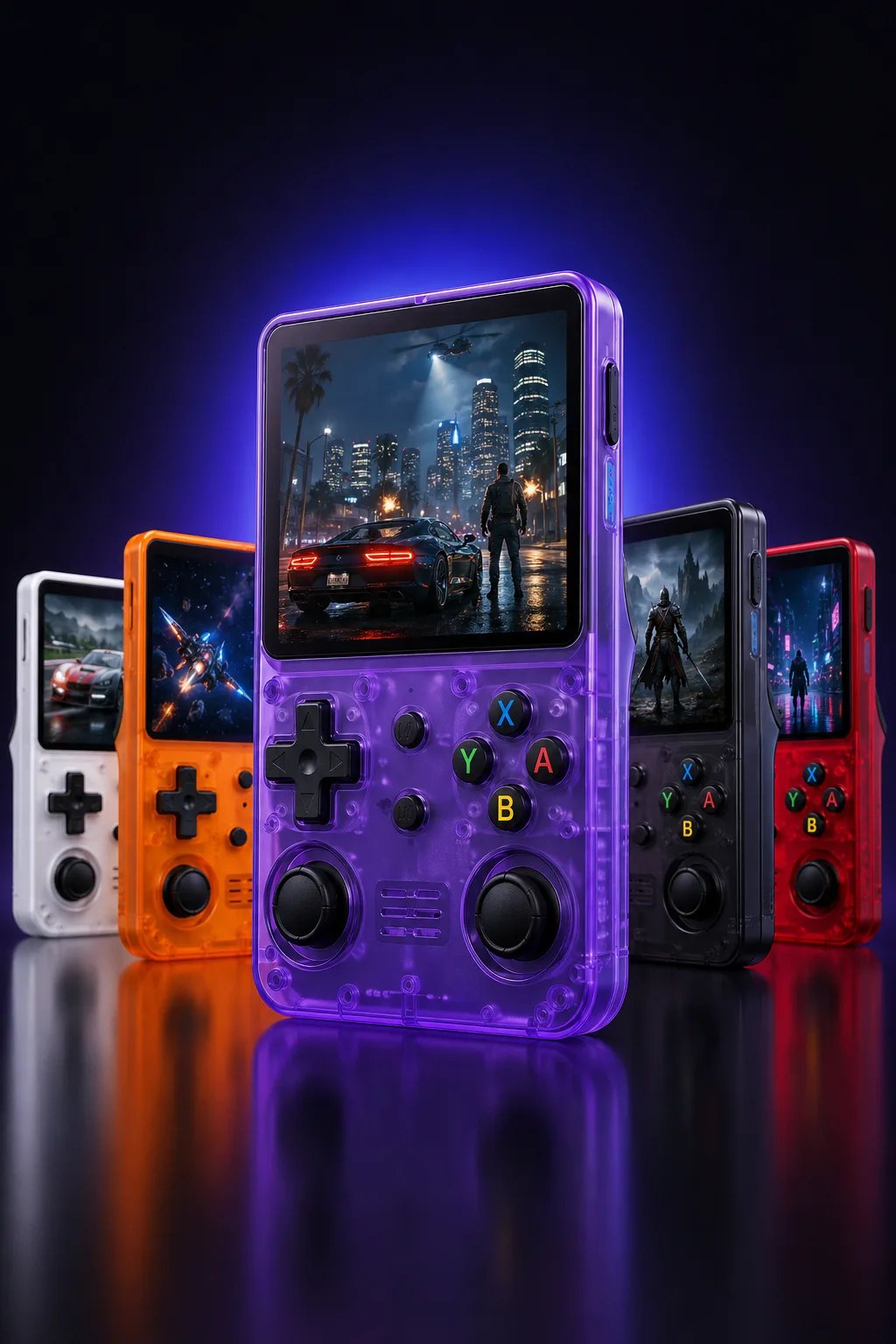
Before buying any handheld gift, check battery life claims, whether the library is preloaded or downloaded separately, and what happens if something arrives defective. Some handhelds ship from a U.S. warehouse with warranty and return policies, which matters more than most buyers realize until they need it.
Matching the Gift to the Type of Retro Gamer
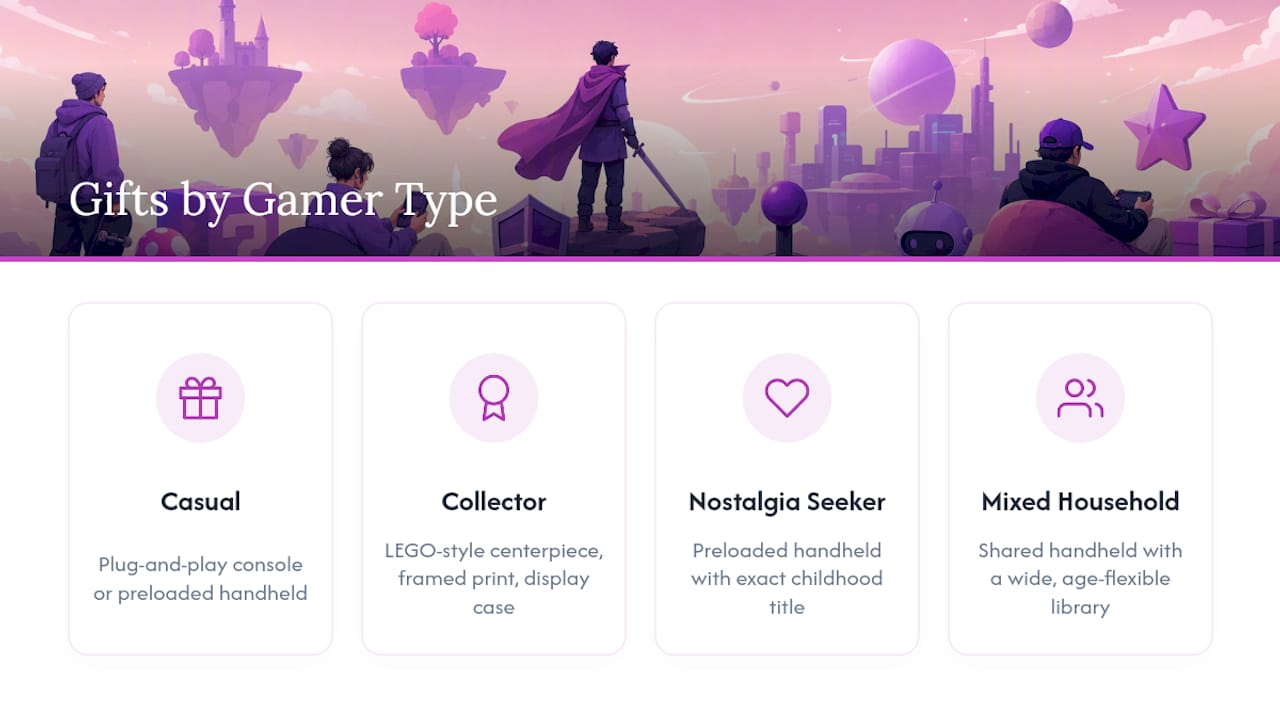
A casual gamer wants low commitment and instant reward. A plug-and-play console, a preloaded handheld, or a pixel art desk accessory fits this person well, since none of them demand research or maintenance. They want to feel nostalgic for twenty minutes, not manage a hobby.
A hardcore collector already owns hardware and knows exactly what they’re missing. Display pieces beat playable gifts here almost every time, because duplicate consoles are a real risk with this group. A LEGO-style centerpiece, a framed print of a specific game they’ve mentioned, or a display case for cartridges they already own all land better than another handheld.
A nostalgia seeker sits in the middle. They probably don’t own current retro hardware, but a specific game or console from childhood means something to them emotionally. A preloaded handheld with that exact title included, a themed mug referencing the game, or a trivia set built around their gaming decade all work. The trick with this group is specificity: a generic “retro gamer” gift lands flatter than one that references the exact console or game they grew up with.
Mixed households (a parent and a kid, or two siblings with different tastes) tend to do best with a shared handheld loaded with a wide library, since it flexes across skill levels and play styles without picking sides.
What Actually Matters When Buying These Gifts
Most gift guides treat “retro gaming gifts” as one undifferentiated category, and that’s the mistake worth calling out directly. A controller upgrade and a LEGO display set solve completely different problems for completely different people, and lumping them together is how buyers end up gifting a fourth handheld to someone who already has three.
The conventional advice to “just buy the most popular retro item” ignores that popularity data reflects average taste, not this specific recipient’s shelf space or existing collection. A best-selling handheld is wasted on someone who already owns two. A best-selling display piece is wasted on someone who wants to actually play games, not look at them.
What actually moves the needle is the play-versus-display question asked upfront, before browsing anything. It sounds almost too simple to be useful, but it’s the filter that eliminates roughly half of any gift list instantly and stops the scroll-forever browsing spiral that ends in a generic mug nobody asked for. Prioritize that question over price, over brand reputation, and over how impressive a gift looks wrapped. A modest gift that matches how someone actually engages with retro games beats an expensive one that guesses wrong.
— Sean
Get Retro Pulse: The Handheld That Skips the Guesswork
Some companies design handheld consoles specifically to remove the compatibility guessing game this whole guide is about. No downloads, no account setup, no wondering whether a cartridge matches someone’s region. Such handhelds come loaded with thousands of games across many systems before shipping.
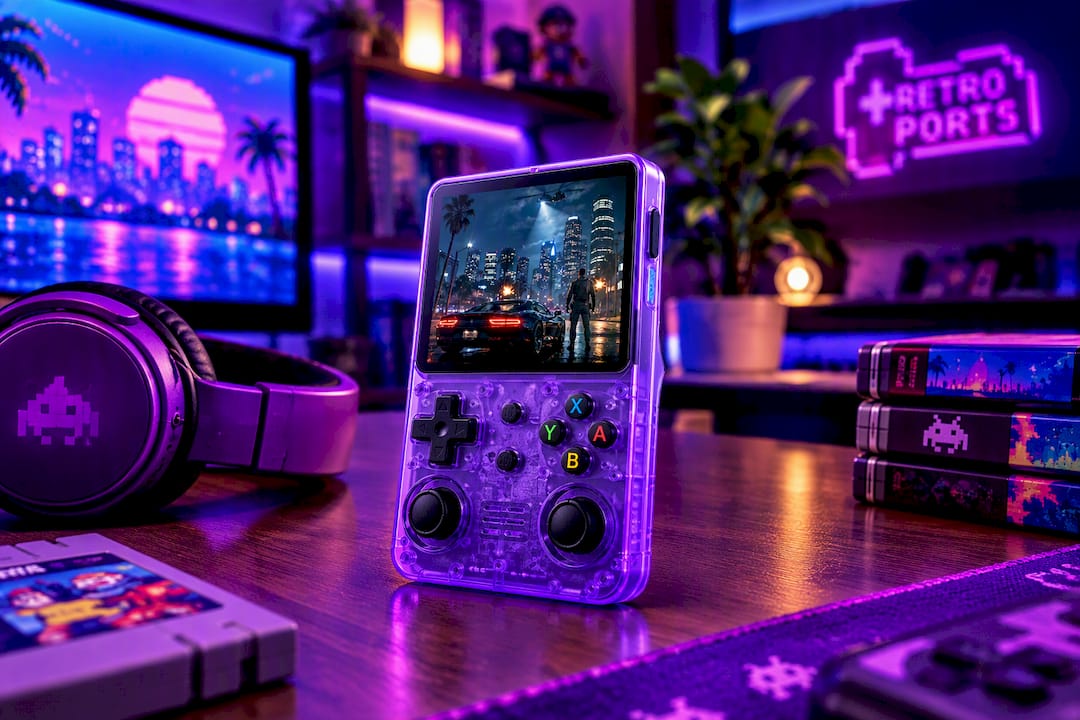
For a commuter, a parent introducing a kid to their own childhood games, or a nostalgia seeker who doesn’t want to research compatibility, some preloaded handhelds work the moment they’re unwrapped. Many ship from a U.S. warehouse with warranty and return policies, so a defective unit or wrong guess isn’t a permanent problem. If you want the details on specs, library, and current availability, check the Retro Pulse product page or browse the full shop for bundle options on multiple units.
Sources
- Emulation vs original hardware: pros and cons
- Review: LEGO 71395 Super Mario 64 Question Mark Block
- Build a Raspberry Pi retro video game console
FAQ
What are some good retro gift ideas?
The strongest picks fall into three groups: something to play (a handheld or plug-and-play console), something to display (framed art or a LEGO-style model), or something to organize an existing collection (cases, cleaning kits, stands). Matching the category to the recipient’s actual habits matters more than the specific item.
What are some unusual gifts for a gamer?
Pixel art speakers, cartridge-shaped coasters, and dioramas built around a specific game level tend to surprise people because they’re decorative rather than purely functional. A framed print referencing an obscure or deeply personal favorite game usually lands better than a generic “gamer” item.
What are some good gaming-related gifts overall?
Beyond retro-specific picks, wireless retro-style controllers, display cases, and curated trivia games work across almost any recipient type. A preloaded handheld like Retro Pulse is a reliable pick when you’re not sure exactly which console or games someone prefers, since it covers more than 20 systems in one device.
What are good retro gaming gift ideas for 2026?
LEGO-style console builds and framed pixel art remain strong picks for collectors, while preloaded handhelds continue to be the safest choice for casual players and nostalgia seekers who want instant playability. Stocking-stuffer items like enamel pins and heat-changing mugs remain reliable low-cost additions to any bundle.
Is a Raspberry Pi retro console cheaper than a preloaded handheld?
Not usually, once you factor in the extra parts. A Raspberry Pi build needs a power supply, case, storage card, and controller on top of the base board, and the final cost often runs higher than the sticker price suggests. A preloaded handheld avoids that add-on math entirely.